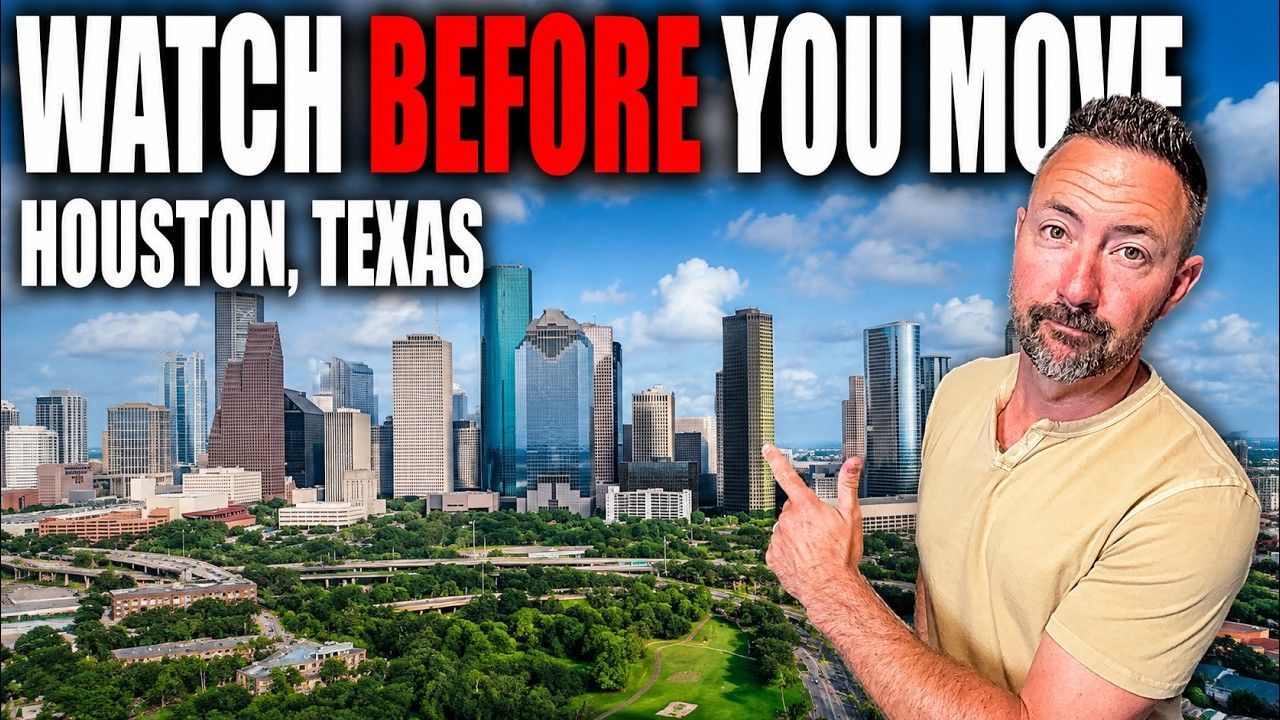
Living in Houston, TX: What to Know Before You Move
I stood in the parking lot of Cinco Ranch on my first scouting trip to Houston, reading the map on my phone for the third time, trying to figure out where this massive master-planned community actually started and where it ended. My wife and I had flown in from Idaho with three days to pick the place we'd raise our kids, and I remember thinking: "I just wish we had somebody to talk to." Someone who could tell us what these neighborhoods actually felt like, not what the blogs said they felt like.
Six years later, after living in three different Houston-area neighborhoods, helping hundreds of families relocate here, and filming every corner of this sprawling metro, I'm that person now. And if you're moving to Houston Texas or trying to figure out the best areas to live in Houston Texas, I want to save you from the mistakes most relocators make, the ones that cost them time, money, and the heartbreak of pulling kids out of schools they just started to love.
This is the raw truth about what you need to know before living in Houston Texas: the flooding, the storms, the humidity, the bugs, the property taxes that shock you even when you think you're prepared, the commutes that look fine on a map but eat your soul in practice, and the seven areas I personally considered (or lived in) when my family relocated here.
Every part of Houston feels completely different, and where you choose will completely impact your lifestyle and whether you're still here in three years or selling to move again.
Table of Contents
New Construction vs. Resale Homes in Houston, TX
This is the biggest financial decision you'll make when buying a home in Houston, and most relocators don't realize it until they're already here.
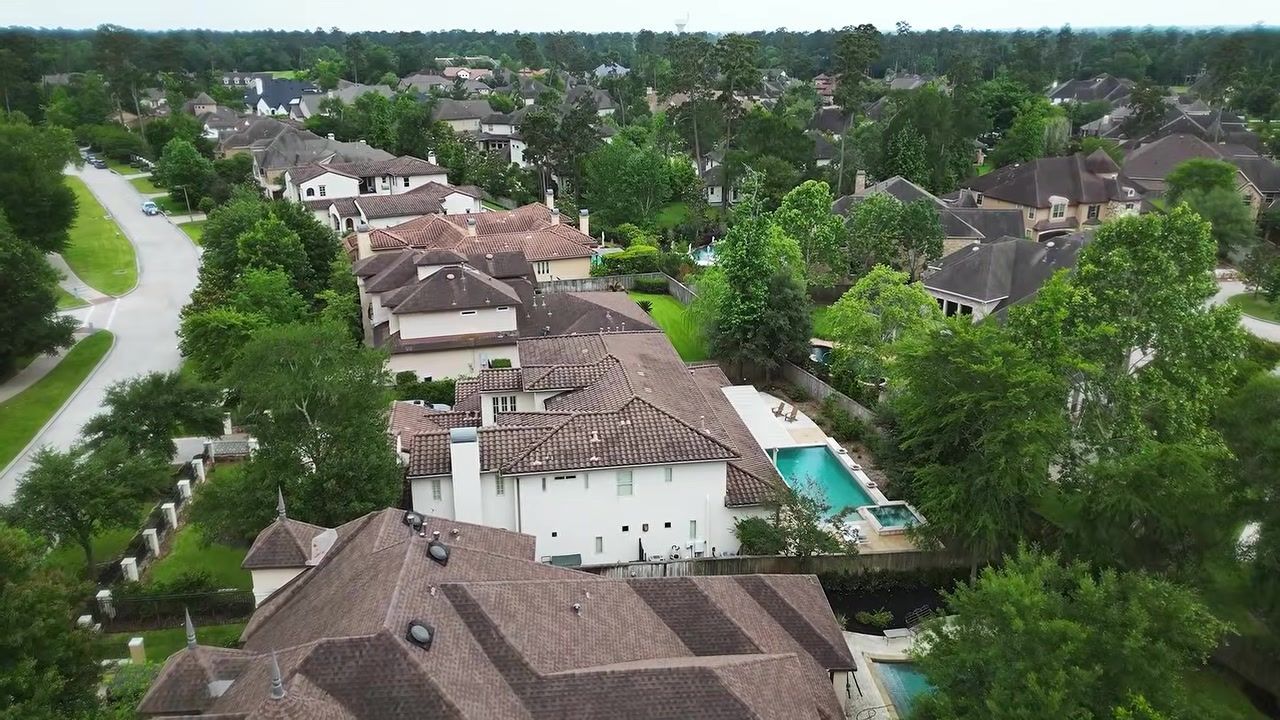
New construction in areas like Cypress has property tax rates of 3.2% to 3.6%. Resale neighborhoods in Kingwood, The Woodlands, Sugar Land, and Sienna have rates of 1.8% to 2.1%. On a $500,000 home, here's what that looks like:
- New construction at 3.5% : $17,500 per year in property taxes
- Resale at 1.8% : $9,000 per year in property taxes
- Annual savings with resale : $8,500
- 10-year savings : $85,000
That's real money. That's $85,000 you could put toward retirement, your kids' college, or paying off your mortgage early. And it's not a one-time thing, it's every single year.
But new construction has advantages. You get builder incentives, right now, we're seeing $10,000 to $20,000 toward closing costs, price reductions of $40,000, rate buydowns. You get warranties on everything. You get a turnkey home where nothing needs maintenance. You get resort amenities, pools, pickleball courts, water parks. And you don't have to worry about whether the AC is going to die or the roof needs replacing.
Resale homes in established neighborhoods give you mature trees, lower taxes, and a built-in community. But you might need to budget for updates, and you won't have the warranties. You also won't have the mega amenities unless you're in a master-planned community that's 20+ years old, like parts of The Woodlands or Cinco Ranch.
The HOA is pretty similar across the board. Master-planned communities, new or old, are typically $80 to $125 a month, or $1,000 to $1,500 a year. Established neighborhoods like mine in Kingwood are around $700 a year because we don't have the resort amenities.
So which one is right? It depends on what you value. If you want turnkey, warranties, and resort living, new construction is worth the higher taxes. If you want to save $8,500 a year and you're okay with some maintenance, resale is the move. Just make sure you run the numbers before you decide, because that property tax difference adds up fast.
Houston Weather, Flooding and Power Outages
Flooding and hurricanes are probably the number one thing people worry about when moving to Houston. And I get it. Harvey was as bad as it gets. But here's what I've learned after living here for six years, including in a house that flooded.
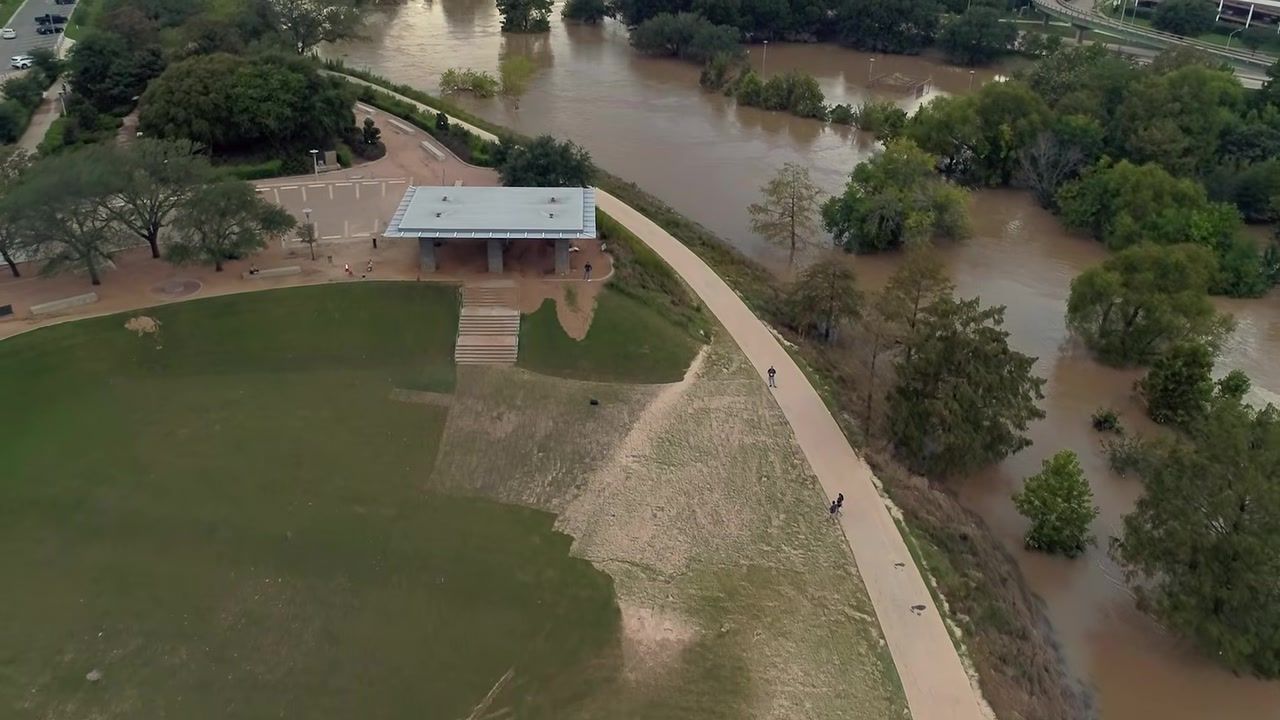
First: flooding is unpredictable. My house flooded during Harvey. Two doors down didn't flood. Nothing else in the neighborhood flooded. You can look at FEMA maps, they'll show you if you're in a 100-year flood zone, a 500-year flood zone, or Zone X (no flood zone). A lot of new communities build up on elevation so they're out of the floodplain. But even with all that data, you can't predict exactly what a hurricane will do.
Hurricanes don't just pick one spot. They can hit the southwest side of Houston and dump rain on Katy while the east side barely sees anything. Or they can come up through Louisiana and hit the north side. Or they can go straight through the middle. You have 3 to 7 days' notice, so you can evacuate if you want. And honestly, they're not as scary as you think once you've been through one.
We carry flood insurance. It's about $1,500 a year for $250,000 in coverage. If this house floods again, it would be terrible, we'd have to move out, do all the repairs, but we'd be covered. It's peace of mind.
Storms are a bigger day-to-day issue if you live in a wooded area like Kingwood. Two nights ago, we had a windstorm at 3 in the morning. Trees were rocking, and one went across the power line in our backyard. I heard the transformer blow. My son came running down yelling there was a fire. It was raining like a monsoon. These storms are wild, and if you live around big trees, you're going to see trees down and power outages.
That's why we have a home generator. It's a 24-kilowatt unit, and when the power goes out, it kicks on automatically. Life goes on. We've had storms knock out power for days in some neighborhoods, and we didn't even notice. If you're moving to a wooded area, I highly recommend getting a generator. I also have a gas-powered backup generator that I let friends use when they need it.
The other thing: I love these trees. That giant American elm in my backyard is my baby. I'm obsessed with it. We had another big oak next to it that fell during a storm, and when we cut it up, the center was completely hollowed out. It was dead inside, but the outer shell still had leaves. It fell, knocked the corner of our house, and landed in the pool. It was a mess. But I wouldn't trade these trees for anything.
Bottom line: storms and flooding are real, but they're manageable. You have advance notice for hurricanes. You can get flood insurance. You can get a generator. And once you've been here a while, you just kind of stop worrying about it as much. You're prepared, and you move on.
Houston Weather: Heat and Humidity

The heat and humidity in Houston are brutal. There's no sugarcoating it. It's stupid hot in the summer, and the humidity makes it feel even worse. Even today, it's only in the 70s, but it's humid, and I'm regretting wearing this thicker shirt.
But here's the thing: I will never go back to cold, gray winters. I spent 35 years in North Idaho, where it snows for months and you're stuck inside. My wife's family is from Montana. We lived in Beaverton, Oregon, where it was gray every single day, and it hit us hard. We moved to Houston partly because we wanted warmer weather, and I would make that trade 100 times out of 100.
Last winter, we had maybe one week of cold weather where it was in the 30s. Other than that, it was 40s, 50s, 60s. In January, we were out golfing. The kids were playing outside in the street. It's limitless outdoor activity. I wear shorts 363 days a year. We can do whatever we want, whenever we want, and we don't have to cram everything into 8 or 9 weeks of summer like we did in Idaho.
The summer is hot, yes. July and August are crazy hot. But our kids are in travel sports, so we're traveling a lot on weekends. When we're home, we escape to water holes, spring-fed rivers near Austin, San Marcos, San Antonio. They're cold and clear, and we go water hole hunting. We also live in our pool. This pool behind me is a godsend. We're in it constantly.
I also found these SPF tarps on Amazon. They're like 15 by 20 feet, maybe $40 or $50, and they're 95% SPF. I rigged one up from the corner of my house to a tree on each side, about 15 feet over the pool. You can sit out here all day in the middle of August because that tarp blocks 95% of the sun. It cools you down so fast. If you're moving here and you're worried about the heat, get a pool and get one of these tarps. Game changer.
The other thing I do: midday walks in July and August. I take the dogs out on the trails at noon or 1 p.m. walk for 20 or 30 minutes, sweat profusely, and then come home and jump in the pool in my underwear. I love that feeling. Some of my golf dads do the same thing. We just embrace the heat.
Remote car starters are also a must. Fire up the AC before you get in, and you're good to go.
The one thing I didn't expect: allergies. That hit me harder than I thought it would. But I knew it was hot when I moved here, and I'm so happy I have this year-round heat. I get to be outside as much as possible, and to me, that's what matters most.
Houston Schools and Commute Times: What to Consider
Schools are important if you have kids, but here's what you need to understand: school districts in Houston are massive. Magnolia ISD, Humble ISD, Montgomery ISD, Conroe ISD, they have hundreds of schools. If you just zone in on an ISD, you might not actually move to a top school area.
You need to drill down. What age are your kids? What special programs do they need? What kind of environment do they thrive in? How close can you get to the actual school? Some of these master-planned communities are in ISDs that aren't highly ranked, but when you go to the schools, they look like universities. The teachers are great, the residents love them, and the kids are thriving. The rankings just haven't caught up yet because the schools are brand new.
And some ISDs that weren't as good are now getting brand new master-planned communities with brand new schools, and the ratings haven't caught up. So don't just look at the ISD ranking. Look at the specific schools.
If your kids have extracurricular activities, baseball, soccer, basketball, tech coding, there are certain areas that are meccas for those. You need to factor that in when choosing where to live.
The other thing: commutes. This is probably the number one thing that eats people up. They fall in love with an area, they think they can handle the commute, and then the daily grind wears them down.
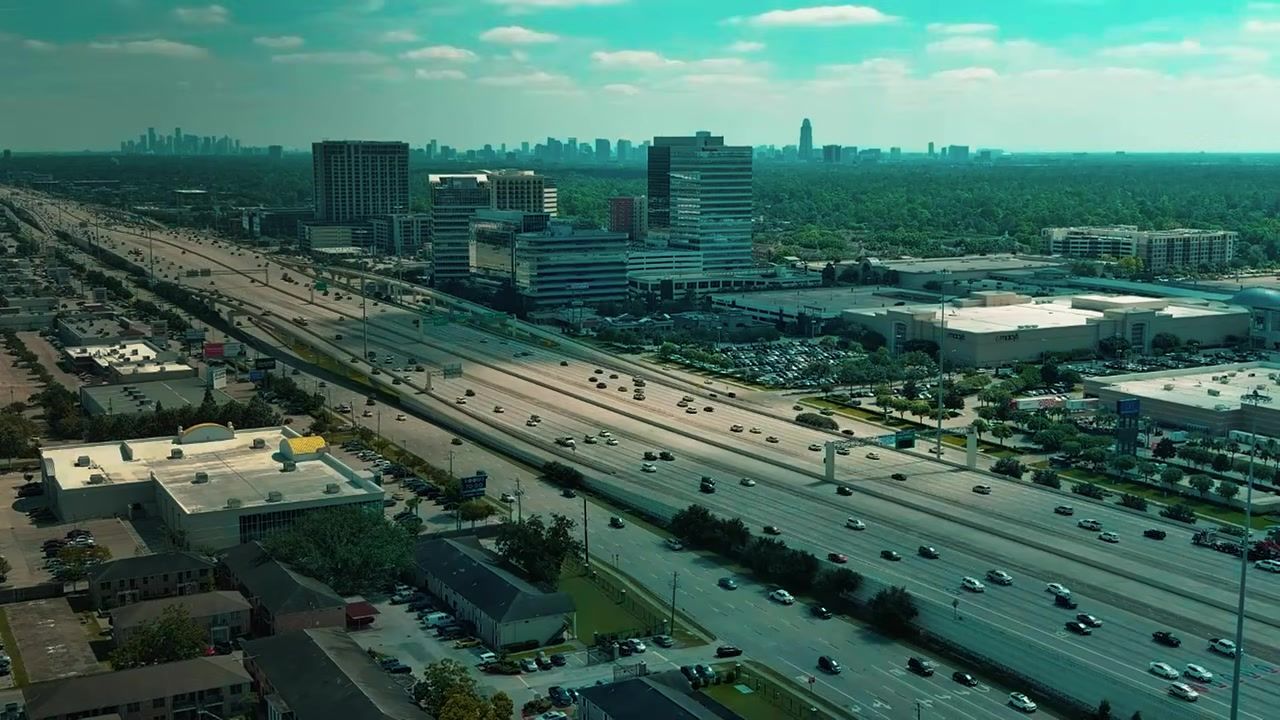
You don't measure distance in Houston by miles. You measure it by time. Thirty or 40 miles can be an hour, an hour and a half each way, every single day. And if you haven't done Houston commutes, you don't realize how much that adds up. Even if you visit once or twice and the commute doesn't seem that bad, it's the daily commute that'll kill you.
You need to be close to whatever your life involves, your job, your kids' activities, your community. If you're not, you're going to be miserable. And that's one of the main reasons relocators sell 71% to 77% faster than locals. The national average is people sell homes every 7 to 10 years. Relocators sell every 2 to 3 years. Why? Because they picked the wrong area. They fell in love with the house, thought they could handle the commute, and then realized they couldn't.
Find the area first. Then find the house. Don't do it the other way around.
Which Houston Area Is Right for You?
If you want local schools and master-planned amenities and you don't mind the lack of mature trees or the distance from other parts of Houston, Katy / Cinco Ranch is a can't-miss. It's one of the most mentioned areas for relocators, and the schools alone make it worth considering. Just know it's a huge community, and you'll need help narrowing down which village or neighborhood fits you.
If you want Gulf Coast access and you work or live in the southeast corridor, League City / Dickinson is great. But if your life is anywhere else in Houston, the commute will wear you down. It's farther than it looks on a map.
If you want prestige, mature trees, and an established master-planned community and you can afford the higher price point, The Woodlands is one of the top places to live in the country. The property taxes are lower than new construction areas, and the resale market is strong.
If you want Lake Houston access, big trees, and a nature feel in the northeast, Humble/ Atascocita is solid. Just make sure you pick the right neighborhood within the area, because each section feels completely different.
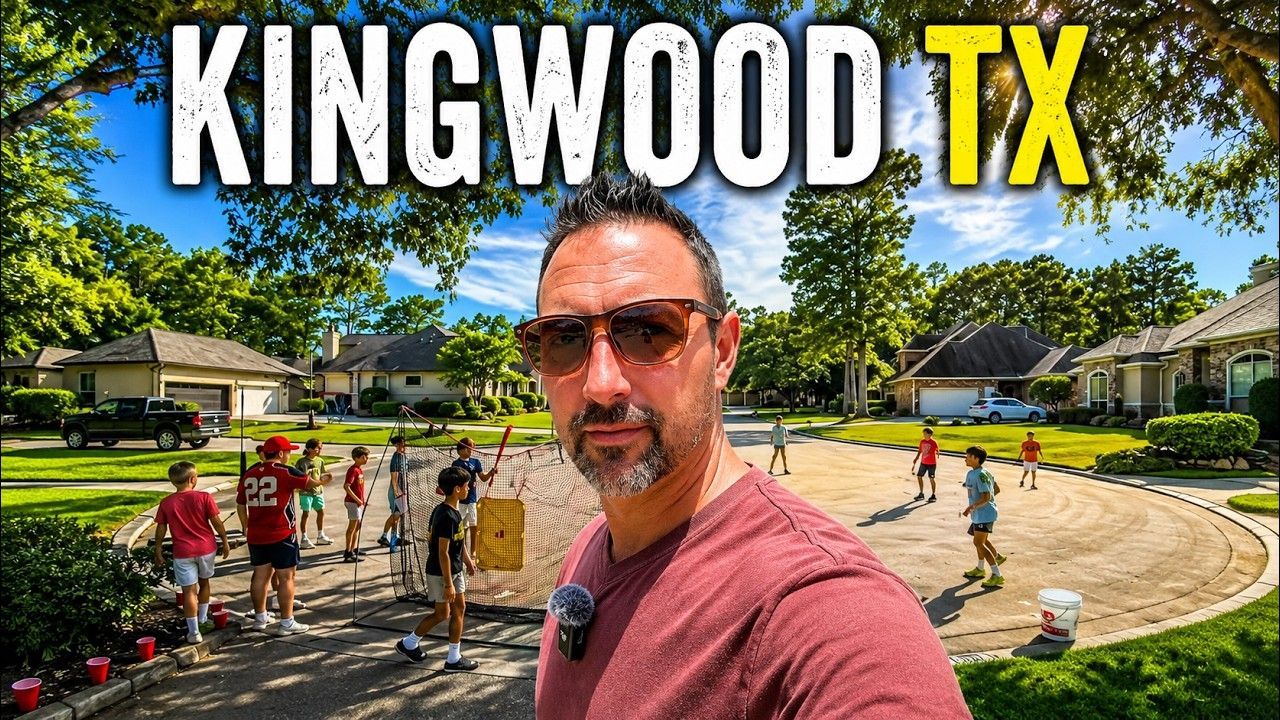
If you want mature trees, with a playground nearby cul-de-sacs, lower property taxes, and an established community where people stay long-term, Kingwood is incredible. It's where I live, and I'm not leaving. Just know some homes flooded, and storms knock down trees and power.
If you want new construction, resort amenities, builder incentives, and turnkey move-in , Cypress is the fastest-selling area in Houston. The property taxes are high, 3.2% to 3.6%, but people don't care. They want the amenities and the warranties.
If you want established resale neighborhoods with lower taxes, mature trees, and a strong market , Sugar Land/ Sienna is quietly humming. Remodeled homes with pools get multiple offers, and you'll save thousands a year on property taxes compared to new construction.
Choose new construction if you want turnkey, warranties, and resort living and you're okay paying higher property taxes. Choose resale if you want to save $8,500 a year on a $500,000 home and you're okay with some maintenance.
Choose wooded areas if you want big trees and nature and you're okay with storms and power outages. Choose newer developments if you want open spaces and don't mind waiting for trees to grow.
Choose close to your job if you want to keep your sanity. Don't underestimate the daily commute.
Conclusion: Find the Area First, Then Find the House
The number one most important decision you'll make when moving to Houston is choosing the area. Not the house. The area.
I've seen it over and over: people come here with a few areas in mind, they scratch the surface on 5% of what those areas actually are, they fall in love with a house, and then a year or two later, they're selling and moving again because they picked the wrong spot. The national average says relocators sell 71% to 77% faster than locals, every 2 to 3 years instead of every 7 to 10 years. That's because they picked the wrong area.
Don't let that be you.
When we moved here, we went through this exact process. We flew in with three days to figure it out. We had a list of areas. We drove to Cinco Ranch and got lost. We drove to League City and realized it was way too far. We looked at The Woodlands and couldn't afford it. We settled in Humble and realized a year and a half later it wasn't the right neighborhood. We moved to Kingwood, and now I'm turning down job offers because I don't want to leave.
That's what I want for you. I want you to find the place where you turn down job offers because you don't want to leave. And the only way to do that is to find the area first, then find the house.
We've built our whole team around this. We ask a lot of questions on our Zoom calls. We don't do the talking, you do. We want to know what you're looking for, what matters to you, what your life looks like. And then we narrow it down to two or three areas that actually fit, instead of letting you chase the wrong spot.
We've also built the only website like this: originalhoustontexas.com. Click on the Explore the Area tab, pick any suburb you're thinking about, and you can watch all of our videos of that area. Because you can't read about these places. You need to see them with your eyes.
If you're planning a move to Houston, reach out to us. Call or text us at (832) 201-8518. Email us at Houston@realagentnow.com. We're available 24/7, and we'd love to help you figure this out.
Living in Houston Texas can be incredible. Texas people are amazing. The South has been the greatest thing that's ever happened to our family. But you have to find the right area, and we can help you do that.
FAQ: Moving to Houston Texas
What are the best areas to live in Houston for families relocating from out of state?
The best areas depend on what you're looking for. Katy and Cinco Ranch have local schools and master-planned amenities. The Woodlands is top-ranked nationally with mature trees and prestige. Kingwood has big trees, with a playground nearby neighborhoods, and lower property taxes. Cypress has resort amenities and new construction with builder incentives. Sugar Land and Sienna have established resale neighborhoods with lower taxes. Each area feels completely different, so you need to match your lifestyle to the right spot.
How bad is flooding in Houston, and should I avoid buying a home in a flood zone?
Flooding is unpredictable. My house flooded during Harvey, but two doors down didn't. FEMA maps show flood zones, and new communities often build on elevation to avoid floodplains. Flood insurance costs about $1,500 a year for $250,000 in coverage. Some people won't buy a flood house, and that's fine. We love our area enough that we were willing to take the risk. You have 3 to 7 days' notice before hurricanes, so you can evacuate if needed.
What is the property tax rate in Houston, and how much will I actually pay?
Property tax rates in Houston range from 1.8% to 3.6% depending on the area. New construction communities like Cypress are 3.2% to 3.6%. Established resale neighborhoods like Kingwood, The Woodlands, and Sugar Land are 1.8% to 2.1%. On a $500,000 home, that's the difference between paying $9,000 a year and $17,500 a year, a savings of $8,500 annually with resale.
How hot does it really get in Houston, and how do people manage the summer heat?
Summer in Houston is brutally hot and humid, especially July and August. But you get year-round outdoor activity and no gray winters. Most people have pools, and I use a 95% SPF tarp over mine so we can sit outside all day. Remote car starters for AC, escaping to spring-fed rivers near Austin, and embracing midday walks are how I manage it. The trade-off is worth it, I wear shorts 363 days a year and never deal with snow again.
How do I choose the right school district when moving to Houston with kids?
Don't just look at the ISD ranking. School districts in Houston are massive, hundreds of schools in each one. You need to drill down to the specific schools in the neighborhood you're considering. Some brand new schools in growing areas don't have rankings yet but are excellent. Ask about the specific elementary, middle, and high school your kids would attend, and verify current information with the district.
How long is the commute in Houston, and should I live close to my job?
Commutes in Houston are measured in time, not miles. Thirty to 40 miles can be an hour to an hour and a half each way, every single day. Even if you visit and the commute doesn't seem bad, the daily grind will wear you down. Live close to whatever your life involves, your job, your kids' activities, your community. Distance is the number one thing that makes relocators sell and move again within 2 to 3 years.

Planning a move to Greater Houston? Living in Houston Texas is your go-to YouTube channel, offering weekly insights on the city’s top neighborhoods and master-planned communities so you can find the perfect place to call home. With our local expertise, we're here to make your Houston relocation smooth and enjoyable!
Watch The
Latest Video